
How to Run a Relationship Retrospective With Your Partner

A relationship retrospective is a regular look back at the last week or month with your partner, using three questions: what went well, what didn't, and what you want next. You each write your answers separately, share them at a set time, talk through each one, and agree on a small change for the next stretch.
The idea comes from software teams, who hold a "retro" at the end of every sprint. The format works for couples for the same reason it works at work: it gives you a regular, expected slot to raise things, so they don't come out sideways during an argument about the dishwasher.
The three columns of a couples retro
Team retros come in many flavours (start/stop/continue, mad/sad/glad), but the plainest one translates best to a relationship:
- What went well: moments you enjoyed, things your partner did that you noticed, small wins.
- What didn't: things that hurt, annoyed you, or felt off. Written about the moment and how you felt.
- What we want next: plans, requests and ideas for the coming week or month.
Why writing separately matters
If you sit down cold and ask "so, how was the week?", whoever talks first sets the agenda and the other person reacts. Writing separately means both of you arrive with your own list, and the quieter partner's points get the same space as the louder one's.
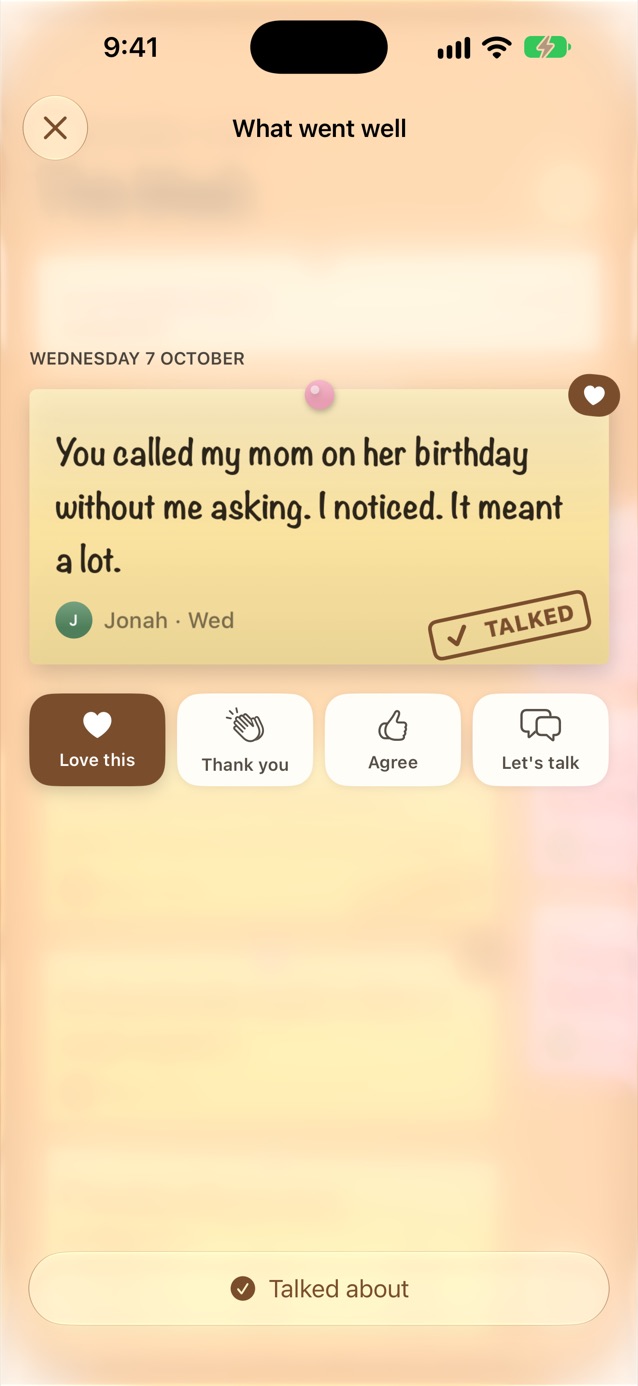
It also fixes memory. A note written on Wednesday night ("you called my mom on her birthday without me asking, it meant a lot") is more specific and more generous than anything you'd remember by Sunday.
Keep notes sealed until the reveal
The trick that makes a relationship retro feel calm is waiting. If your partner reads "I felt ignored at dinner on Tuesday" at 11 pm on Tuesday, you get the fight anyway. If they read it on Sunday evening with a cup of tea, alongside three notes about things you loved, it lands as information.
This is the core of Couples Retro. Notes are sealed until the reveal time you both chose. Before that, your partner can see that you've written four notes, never what they say. At the reveal the board opens on both phones at once.
Running the retro itself
Go column by column. Read the good notes first and say thank you for them, out loud or with a quick reaction. Then take the hard notes one at a time. The person who wrote it explains in a sentence or two, the other listens and responds. Mark it done when you've both said what you needed to.
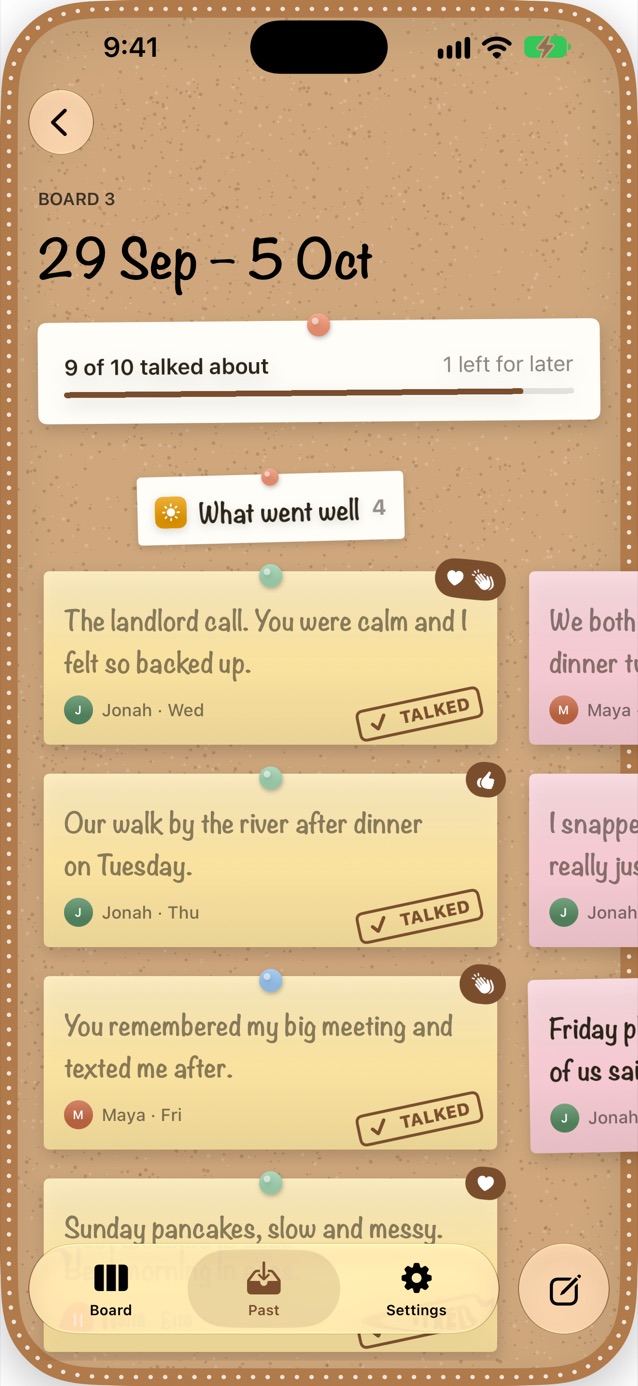
Finish with What we want next. Pick one or two items you'll actually do, and leave the rest for later. Notes you didn't get to aren't failures. Carry them into next week's board and start there.
Weekly or monthly retrospectives?
Weekly retros are short, 15 to 30 minutes, and keep small annoyances from building up. Monthly retros take longer but give you more distance and a bigger picture. Many couples start weekly and settle into whatever rhythm sticks. Our guide to the monthly relationship check-in covers the longer version.
Whichever you choose, keep every past retro. Scrolling back through three months of boards is a good reminder of how much went well, especially in a hard week.
Questions people ask
Where does the word retrospective come from?
Agile software teams hold a retrospective at the end of each work cycle to look at what went well and what to change. Couples borrowed the format because it gives hard topics a regular, expected place.
What if one of us writes far more notes than the other?
That's normal, especially early on. Go through every note, but don't count them. The partner who writes less often finds it easier once they see the retro stays calm.