
How to Bring Up Issues With Your Partner Without Fighting

To bring up an issue without a fight, raise it at a planned, calm time instead of in the moment, describe what happened and how you felt rather than what your partner is like, and ask for one specific change. Writing it down first helps you cool off and say it more clearly.
Most fights about small things happen because of timing. Someone is tired, hungry or already annoyed, and a complaint about the bins turns into a complaint about the whole relationship. The steps below are about taking timing out of the equation.
Write it down before you say it
When something bothers you, write one or two sentences about it straight away: what happened and how you felt. "Tuesday, you made plans for Saturday without asking me. I felt like an afterthought."
Writing does two things. It gets the feeling out of your head, so you stop rehearsing the argument. And when you read it again a few days later, you'll often find you can say it more gently, or that it matters less than you thought. Both are useful to know.
Choose the moment on purpose
Bad times to raise an issue: right after it happens, late at night, before work, when one of you is hungry, or by text. Good times: a planned slot when you're both rested and expecting to talk.
That's the main argument for a regular check-in. If you know Sunday evening is when you talk about the week, you don't have to decide whether now is the moment. You add it to the list and wait.
Describe the moment and how you felt
Compare "You never think about me when you make plans" with "When the Saturday plans were made without me, I felt left out." The first is a verdict on your partner. The second is a report about your week, and it's much harder to argue with.
Avoid always and never. They invite your partner to find the one exception, and then you're debating history instead of fixing Saturday.
Start with what went well
If the only time you sit down together is to complain, both of you will start dreading it. Open with one or two real appreciations from the same week. There almost always are some, and saying them out loud changes how the rest of the conversation sounds.
Ask for one specific change
End the point with a request your partner can actually say yes to: "Can we check with each other before saying yes to weekend plans?" Vague requests ("be more considerate") give your partner nothing to do.
Then listen. Your partner may have context you didn't, or a request of their own. Agree on a next step, and if you run out of time, carry it over to the next check-in rather than pushing through.
How Couples Retro helps
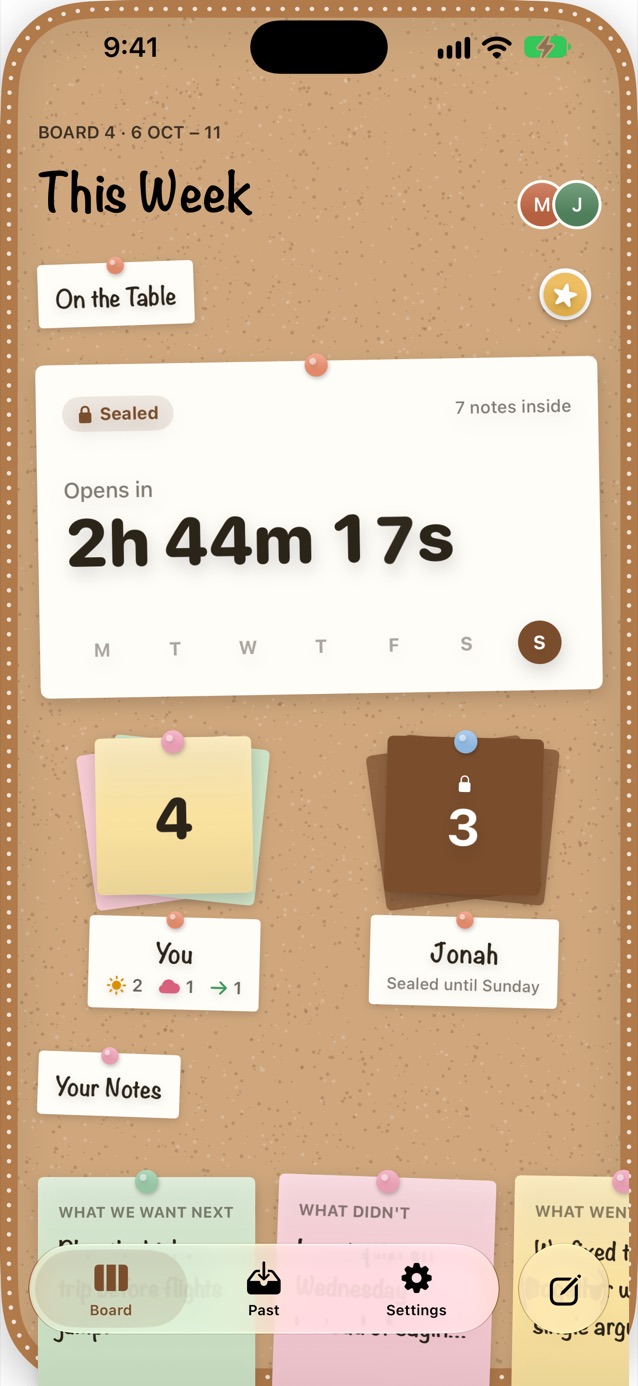
Couples Retro is built around these steps. You drop a note into What didn't when something happens, and it stays sealed until the reveal time you both picked, like Sunday at 7:30 pm. When the board opens, your partner sees it next to your notes about what went well, and can react with Let's talk, Agree or Thank you before you discuss it. For more on the format, read how to run a relationship retrospective.
Questions people ask
Should I bring up small things or let them go?
If it's still on your mind a few days later, mention it briefly at your next check-in. Small things are much easier to talk about while they're small, and your partner can't change what they don't know about.
What if a calm conversation still turns into a fight?
Pause and agree to come back to it, ideally at a set time. If the same topic blows up again and again, a couples counselor can help you find what's underneath it.